Good work can disappear into a folder.
A plan gets tested. A useful guide gets finished. The work is real, but the people who could learn from it, use it, or make a decision based on it may never see it.
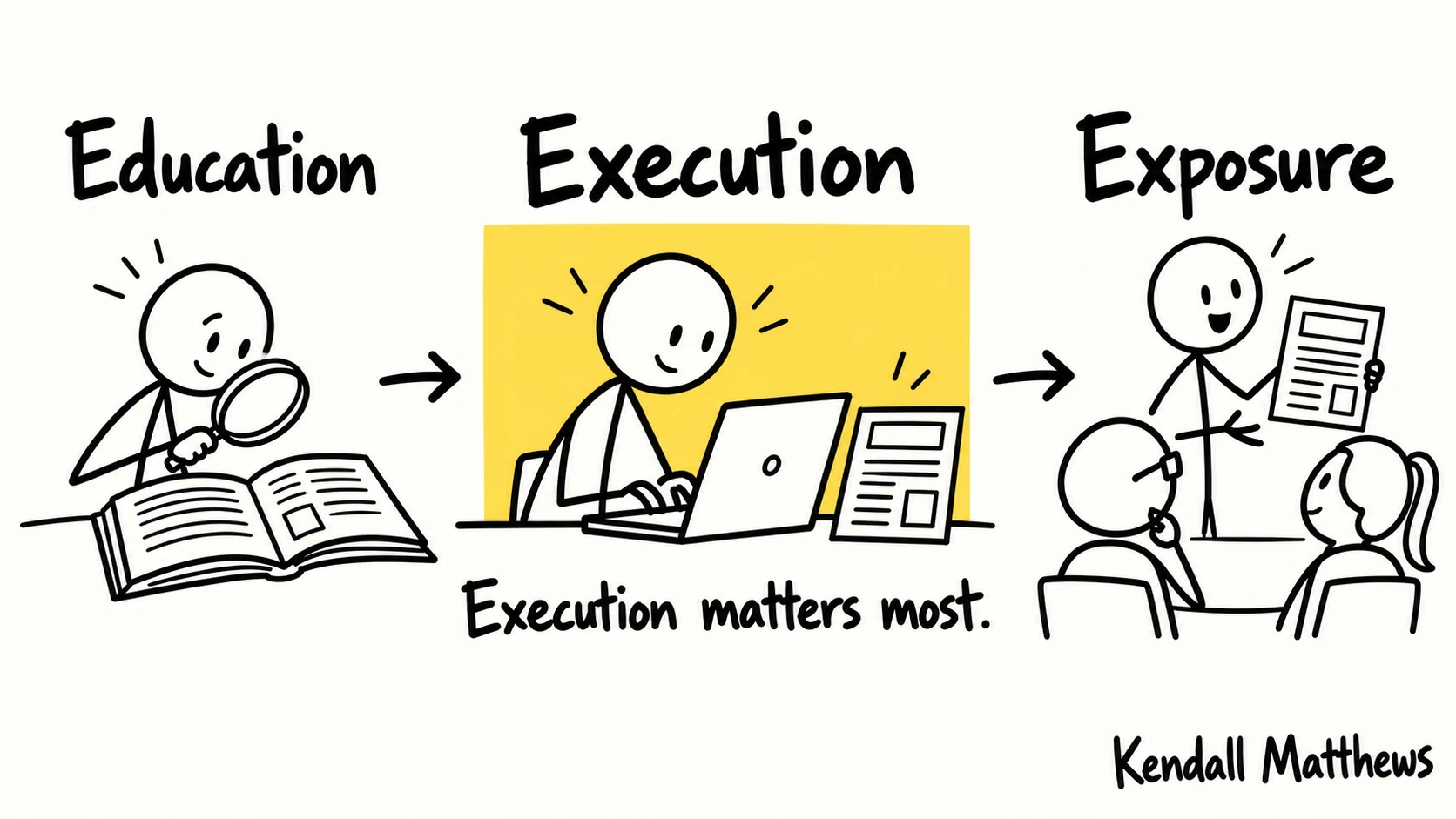
That problem came up during a recent conversation about where I should focus my attention. I kept returning to three words: Education. Execution. Exposure.
I call them Triple E.
Education helps me think better. Execution turns what I’ve learned into real work. Exposure puts that work in front of people who might benefit from it.
The first two made sense right away. The third made me think harder.
What happens to good work when the right people never see it?
Education should change the decisions you make
Education is where I build the judgment to recognize which problems deserve attention. It comes from research, experience, critical thinking, working with AI, and checking competing ideas against evidence.
But consuming information can feel productive long after it stops improving a decision. I can study AI workflows endlessly without testing whether one solves a real problem.
When I’m evaluating an idea, the question that matters is simple: What do I understand now that should change what I do next? When the answer is clear enough, execution should get the attention.
Execution is where ideas meet reality
An idea can sound great until you try it. Execution shows whether it works, what needs to change, and whether it’s worth continuing.
My Second-Pass Audit offers an example.
The starting question was, “What did you miss?” I used it to challenge AI answers. Over time, the useful lesson became more specific: return to the source, identify what the answer missed, correct material problems, and recheck what changed. I documented the method and made it available for other people to examine and use.
I turned that question into a published guide people can try for themselves. The guide shows how the method works. It does not prove that other people use it or that it improves their business results. Those outcomes would need to be tested.
Execution also has a stopping rule. If another round of research or polishing will not change the decision or address a meaningful risk, it may be time to call it “done and dusted.”
Exposure lets the right people evaluate the work
This was the part of Triple E I wanted to name more clearly. By exposure, I mean two things.
- The first is broad visibility: sharing a lesson, demonstration, article, or example so other people can learn from it.
- The second is targeted visibility: putting relevant work in front of people who can use it to make a decision.
Which matters more depends on the situation.
- A YouTube video of a practical AI workflow may help a large audience understand the options.
- Showing that same workflow to a business owner, however, should answer a narrower question: what problem might it address, what would implementation require, and what evidence would justify taking a next step?
- A recruiter reviewing an executive marketing leader needs different evidence again: strategic judgment, cross-functional work, execution, and the ability to explain outcomes without inflating them.
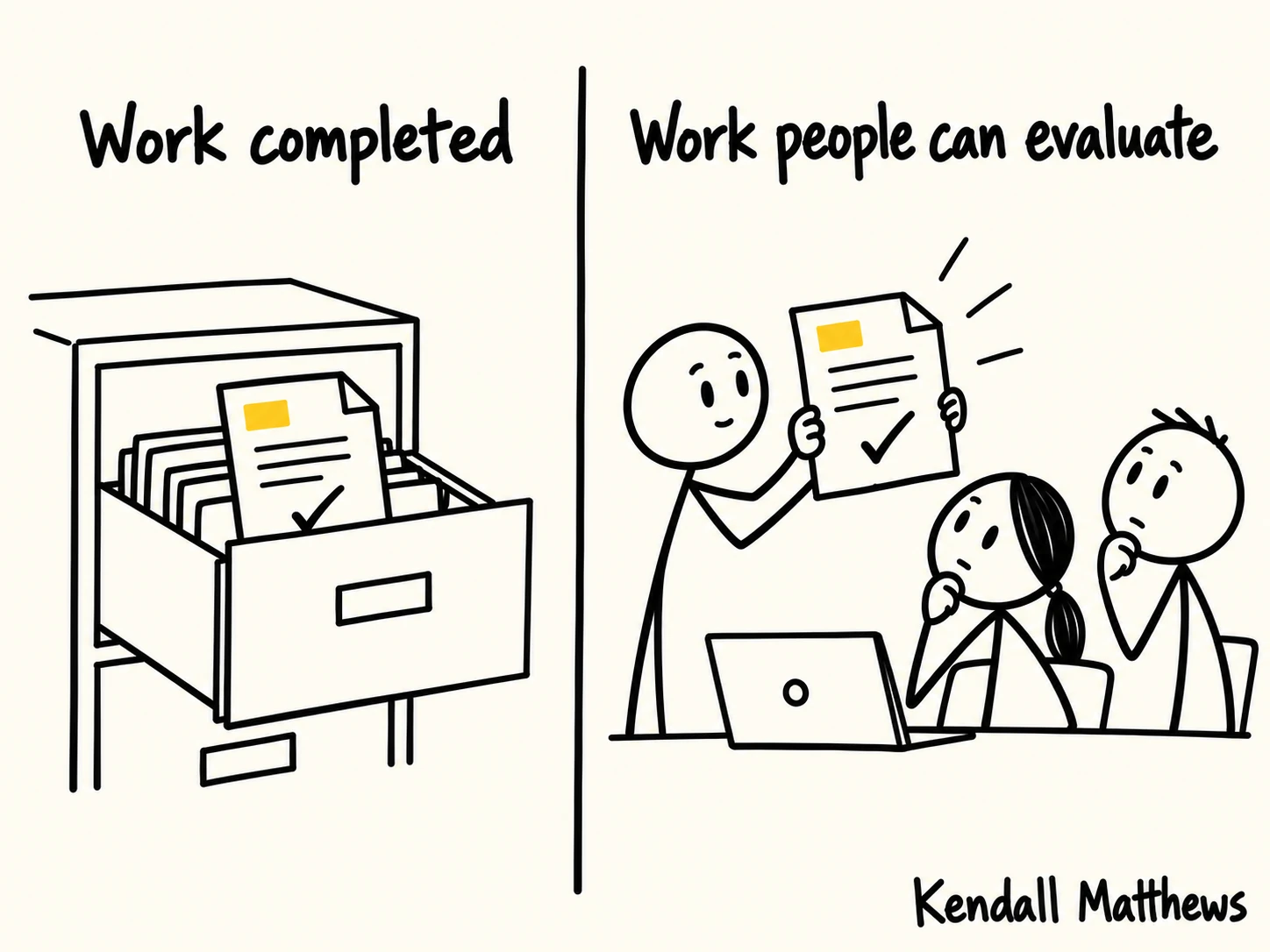
Sharing your work is not the same as proving it works.
A published article proves I shared something. It doesn’t prove anyone acted on it. A view is not a job opportunity, a customer, or a business result.
What matters is showing what you tried, what actually happened, and what you still don’t know.
There’s another reason this matters to me.
LinkedIn’s B2B Institute explains in its Credibility Code research that trust grows when different voices support a message. A company can make a claim, but employees, customers, and other knowledgeable people help others decide whether to believe it.
That reinforces something I’ve been thinking about: doing good work matters, but people also need a way to judge it.
Put all three to work without making three new jobs
Imagine a marketing leader evaluating whether AI can improve the way a service business follows up with inquiries.
- Education means understanding the current handoff, reviewing what AI can reliably do, and identifying the risks.
- Execution means making one change, knowing who’s responsible, and checking whether it worked.
- Exposure means sharing what happened with the owner and team. If the lessons could help others, share them without revealing private information.
The work may reveal that the company needs a clearer process rather than new software. A responsible result may be a simpler process or a decision not to buy.
For an executive, the same idea works with a product launch or go-to-market decision. Learn enough to choose a direction, execute the work, then communicate the results to the people whose decisions depend on it. Visibility should fit the decision the audience needs to make.
You don’t need to spend the same amount of time on all three parts of Triple E. Doing the work matters most. Education helps you do it better. Exposure helps others see what you did and what you learned. When people ask questions or give feedback, you can use that information to learn more, make improvements, and try again.
A reminder, not another operating system
I already use Learn → Apply → Transform to describe how knowledge becomes practical change. Triple E helps me remember where to focus my time and effort.
I can keep it simple. At the end of each week, I ask myself three questions.
- What did I learn that matters?
- What did I do with it?
- Who could benefit from seeing the work or its evidence?
The situation determines which E needs attention.
Before starting something new, look at the work you’ve already completed. Is there something worth sharing that the right people haven’t seen yet? If you want to see a real example, see how I turned the Second-Pass Audit into a usable public resource.