Journalist requests were arriving in my inbox. Some never made it into the Google Sheet I used to review them.
That’s a serious gap for a system built to find opportunities before their deadlines pass.
My Authority Opportunity Finder used AI automation to review HARO and Source of Sources emails, identify requests worth reviewing and flag missing evidence. The tracker looked fine until I compared it with the inbox. That comparison was a practical second-pass audit: checking what the output left out before trusting it.
I needed to decide whether to repair the workflow, replace it or return to checking every request by hand.
When an old estimate stops being useful
In a recent LinkedIn post, Ethan Mollick described conversations with established companies about legacy software.
They had scoped migration projects but couldn’t justify the cost. He reported that AI was making some of those projects feasible at far lower prices.
In May 2026, AWS said its Transform service had processed more than 4.5 billion lines of code in its first year. AWS also estimated that customers saved over 1.6 million hours. These are vendor-reported results, not a forecast of what another company’s migration would cost.
What caught my attention was the original decision. How many companies are still working around problems because of estimates or technical limits that no longer apply?
A business might have turned down an integration because the quote was too high. It might have rejected an automation project because the tools couldn’t handle the work. Both decisions could have made sense at the time. But the original reasons are worth checking again when prices or capabilities change.
What the new quote leaves out
Lower development costs can make an old project attractive. The company still has to move data, test the result, train employees and support the new system. If billing breaks during a migration, a cheaper coding invoice won’t offer much comfort.
In June 2026, Gartner predicted that more than 70% of mainframe-exit projects started in 2026 would fail to deliver their intended benefits because organizations overestimated generative AI’s capabilities. That’s a forecast, not an observed failure rate. Gartner also argued that improving the existing mainframe can sometimes be the better choice.
That is why I’d compare three options before approving a new project: keep the current system, improve it or replace it. Each has costs and risks after the initial work is done. I’ve explored this same choice when building an AI workflow that actually works: start with the work and responsibilities before choosing the technology.
What happened when I tested an AI workflow in Google Workspace
My own workflow gave me a smaller decision to work through.
I used ChatGPT to challenge the qualification rules and identify requests the system might mishandle. The Google Workspace AI automation used Gmail to collect requests, Workspace Studio and Gemini to evaluate them, and Google Sheets to record candidates. I kept human review in place, including for requests that prohibited AI-written pitches.
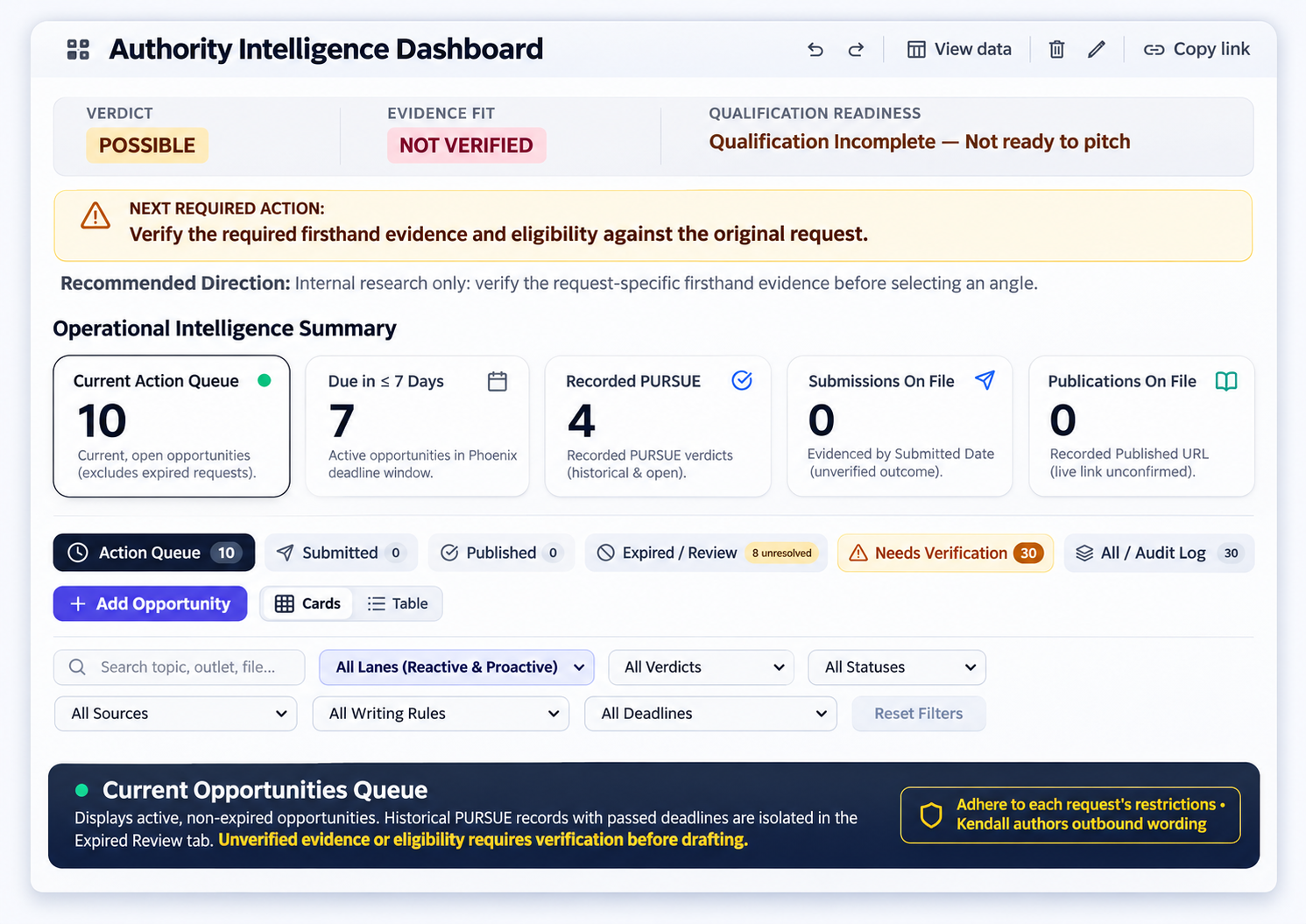
The tests exposed problems. Some requests had failed to reach the sheet. In one run, Gemini hit a usage limit on seven of 27 items. The workflow was spending AI calls on material it could have screened out earlier. This is an AI workflow reliability problem. A clean-looking output tells you very little about the requests that never reached it.
I changed the intake to filter obvious exclusions before calling Gemini. I also improved source tracking and duplicate checks. I kept the existing spreadsheet rather than create another place to look for opportunities.
On October 30, a replay processed three previously recorded requests without errors or duplicate entries. Another test reviewed two discoveries, rejected both and finished without errors.
Those tests showed that specific fixes were working. I still need to see a genuinely new, qualified request complete the entire path. I haven’t measured hours saved, published placements or revenue from the repairs. That distinction matters when finishing and verifying AI-assisted work. Completing the steps isn’t the same as confirming the intended result.
The experience changed how I think about AI automation. Before building another workflow, I want to know whether the one I already have can be repaired, tested and trusted.
The decision I made, and the one I’d revisit
For the Authority Finder, I chose to improve the existing workflow and test it again. Rebuilding it would have introduced more work before I knew whether the tools I already had could do the job reliably. It’s also a decision-making process worth examining: a more elaborate solution can look like better leadership without being the better decision.
My Finder wasn’t a migration project that had sat on a shelf for years. I don’t have an old quote showing that AI made it affordable. It does show how I used ChatGPT and Google Workspace to investigate a real problem, choose an approach and test the result.
Mollick’s observation suggests a useful exercise for any business with a backlog of deferred projects:
- Pull up one proposal you rejected because the cost or technical limits made it impractical.
- Find the assumption that stopped it. Check whether that assumption still holds.
- Get current costs for keeping, improving and replacing the system. Include the time, support and risk involved after launch.
Then decide using today’s costs, risks and evidence your team can verify.